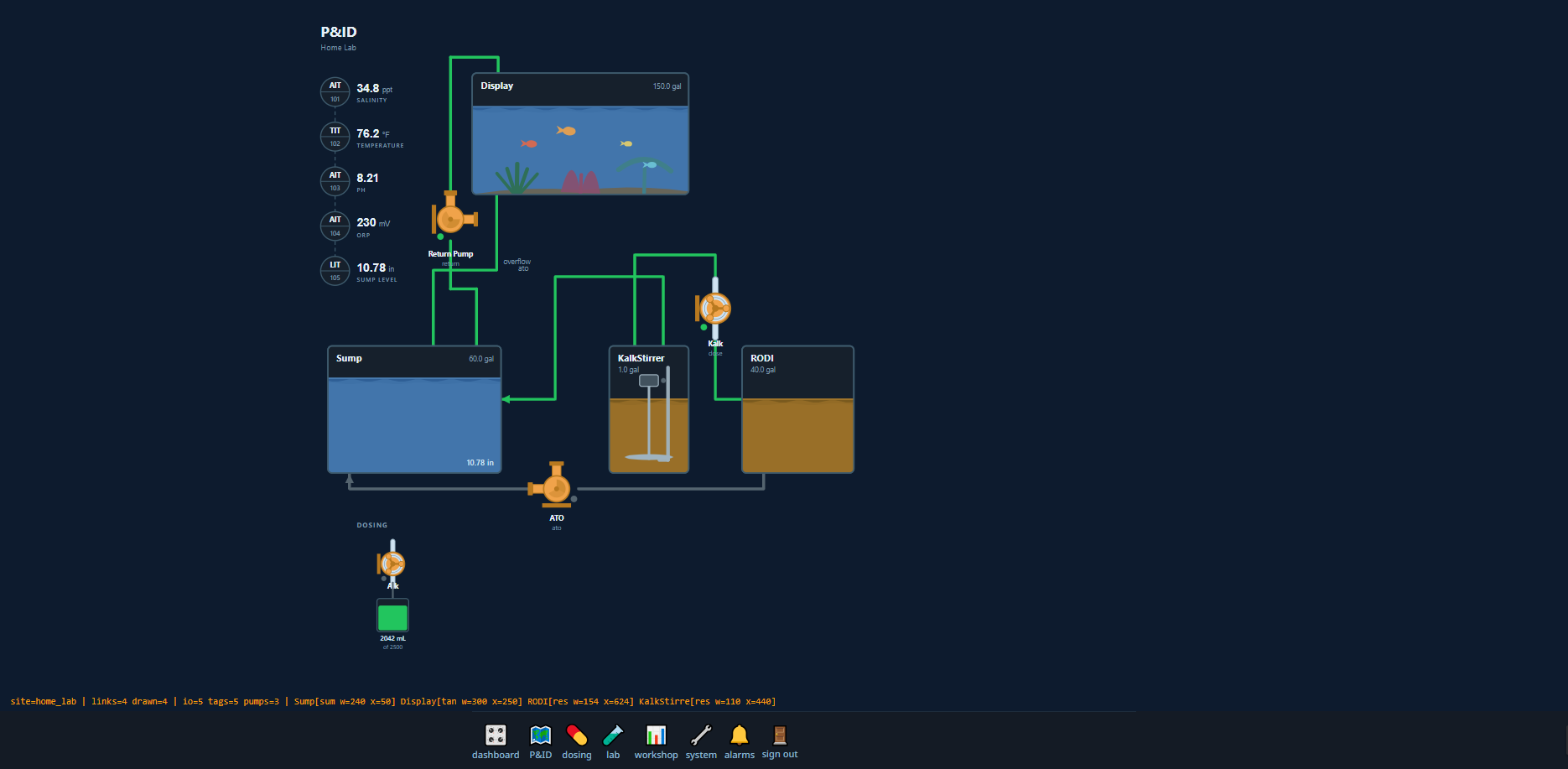
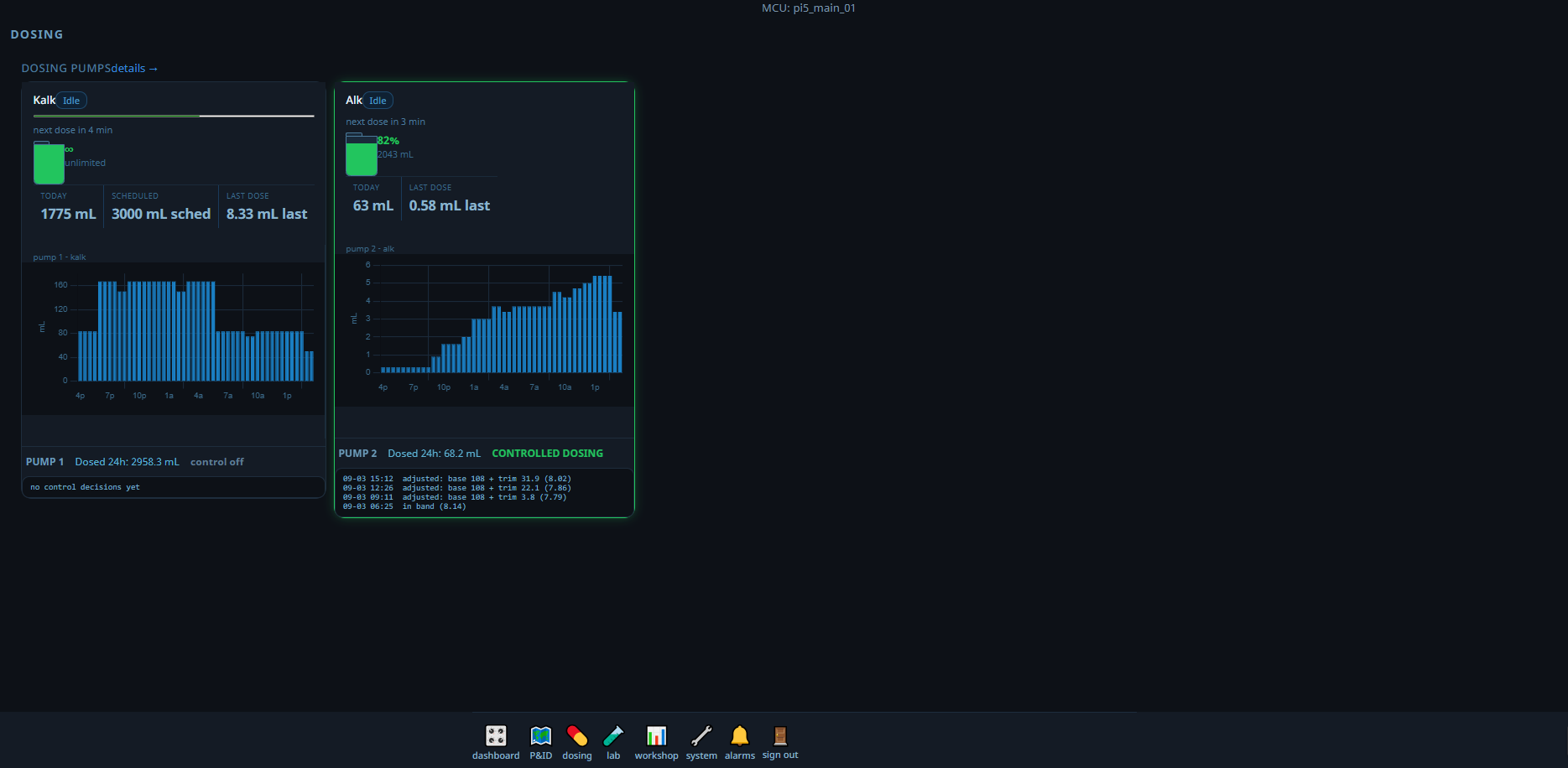
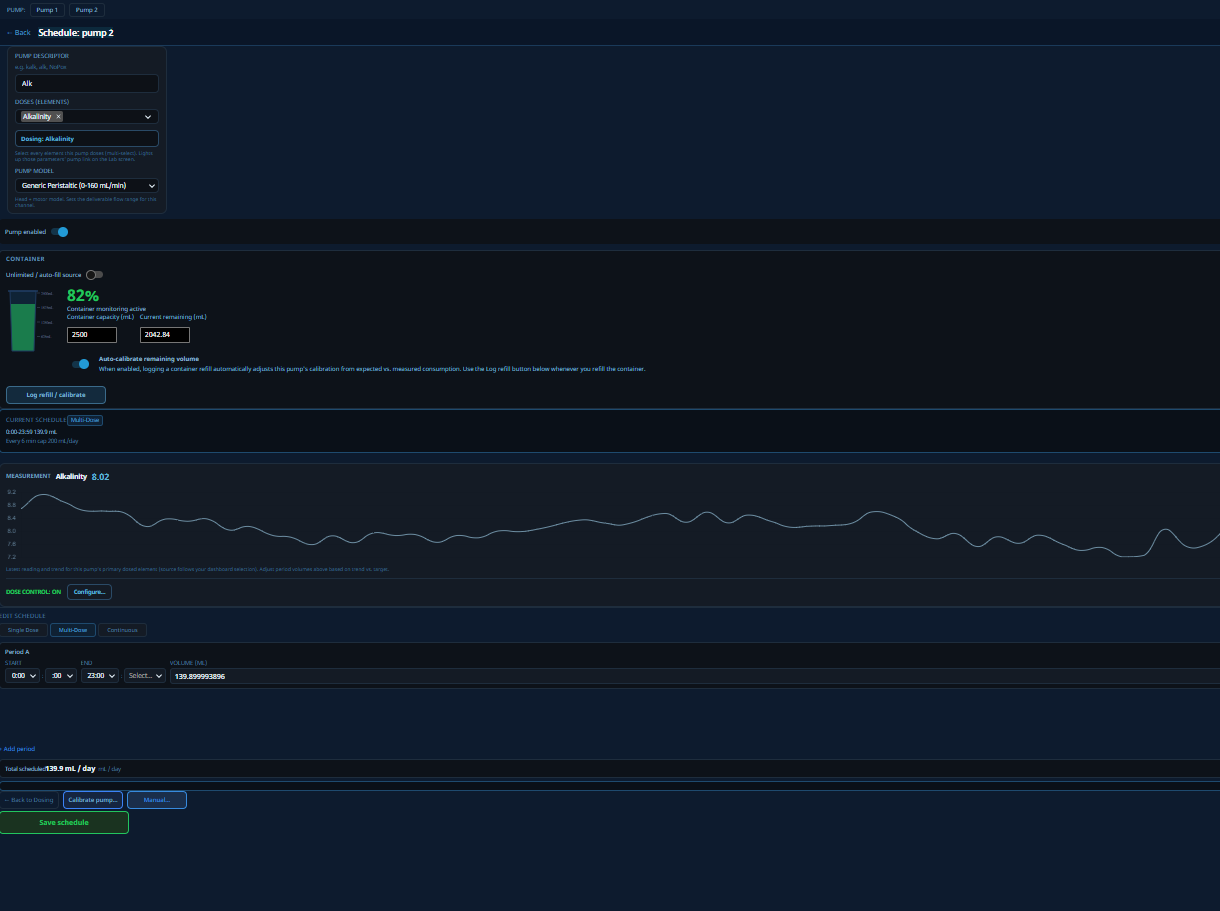
For three decades I've built and commissioned industrial automation — the control systems that run factories, process lines, and plants. Systems where a bad setpoint or a stuck output isn't an inconvenience; it's downtime, scrap, or worse. That world has hard rules: instruments are calibrated, control logic is deterministic, alarms mean something, and the operator always knows what the system is doing and why.
Three years ago I set up my first reef tank. Like most reefkeepers, I bought the controller everyone recommends. And almost immediately, the industrial half of my brain started cataloging everything wrong with it: opaque behavior, clumsy configuration, dosing you can't fully trust, interfaces that hide the state of the system instead of showing it.
A reef tank is a process plant. A small one, but a real one — chemistry, dosing, thermal control, redundancy, alarming. It deserves process-grade controls.
So I built one. Real SCADA architecture underneath, industrial communication protocols, a proper historian for every probe and every dose, and control logic you can inspect rather than guess at. The kind of system I'd sign my name to at work, sized and priced for the tank in your living room.
It's running on live reef systems today — including a retail fish store that depends on it. What follows is a first look.